Losing your hair can feel overwhelming, and the journey to finding solutions often comes with questions that many people don’t know they should even be asking. One of the biggest surprises for many women and female-identifying individuals is learning that some health insurance companies will actually reimburse for a cranial prosthetic (a medical wig or hair piece ). These specialized wigs are not just a cosmetic accessory—they can be considered a medical necessity when prescribed by your doctor.
Unfortunately, salons that work directly with insurance are still rare, but they do exist. With the right knowledge, you can advocate for yourself, find compassionate care, and possibly ease the financial burden of hair loss solutions.
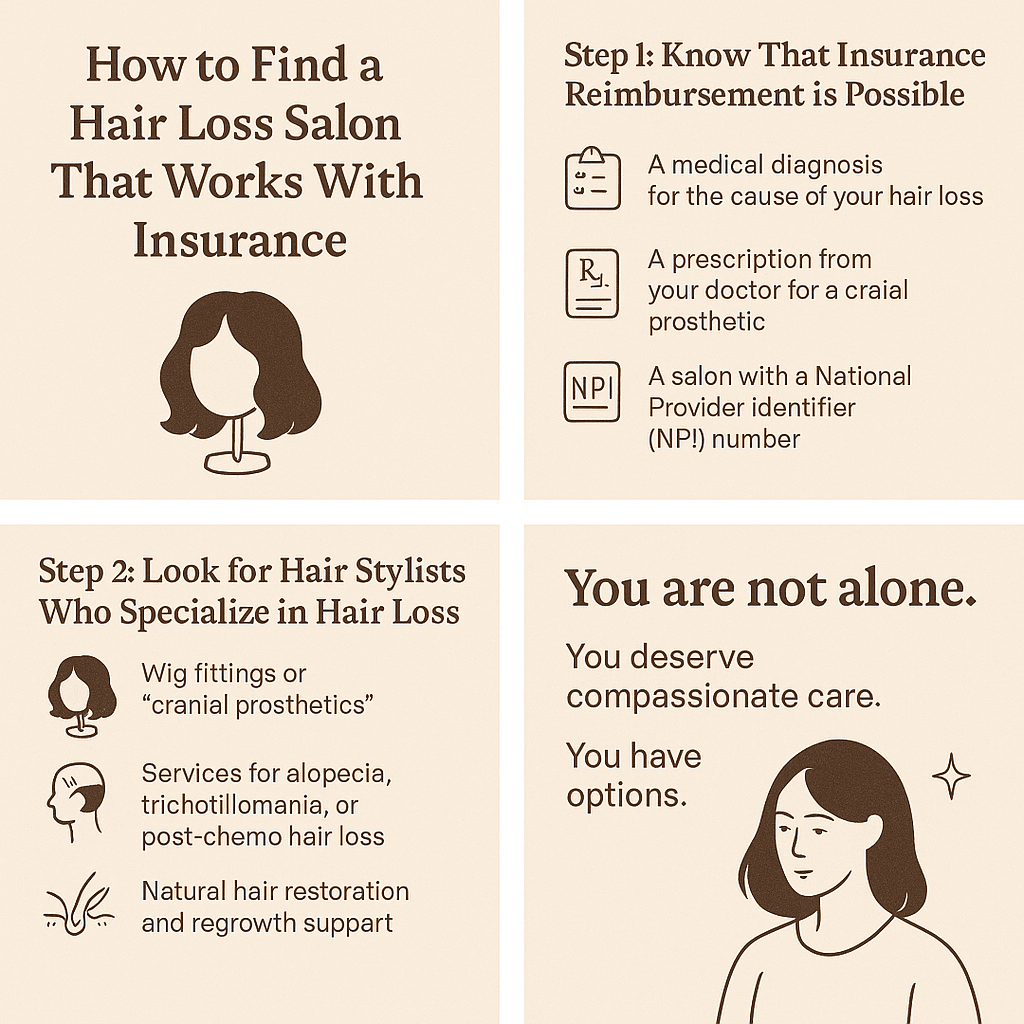
Step 1: Know That Insurance Reimbursement Is Possible
If you’ve never heard of being reimbursed for a wig or hair piece, you’re not alone. Many people are surprised to learn this is an option. To qualify, you’ll usually need:
A medical diagnosis for the cause of your hair loss (such as alopecia, trichotillomania, autoimmune illness, or chemotherapy-related loss). A prescription from your doctor that specifically states you need a cranial prosthetic. A salon with a National Provider Identifier (NPI) number—this makes them recognized as a medical provider for insurance purposes.
With these pieces in place, your salon can provide a detailed invoice (often called a superbill) for you to submit to your insurance company. While reimbursement isn’t always guaranteed, many clients are surprised by what their insurance will cover once they go through the process.
Step 2: Look for Hair Stylists Who Specialize in Hair Loss
Not every stylist has the training or heart to support clients experiencing medical hair loss. When searching, look for salons that specifically advertise:
Cosmetic hair replacement or “cranial prosthetics” Services for alopecia, trichotillomania, or post-chemo hair loss Natural hair restoration and regrowth support.
It’s okay to ask questions before booking. Ask the salon:
“Do you have an NPI number?” “Have you worked with clients who submit for insurance reimbursement?” “What experience do your stylists have with medical hair loss?”
The right salon won’t just sell you hair—they’ll understand the emotional weight of your journey.
Step 3: Ensure Compassion and Privacy
Hair loss can make people feel vulnerable. A compassionate stylist will:
Listen to your story without judgment. Offer private consultation spaces. Respect your privacy, including not posting your photo on social media without consent.
If protecting your identity is important to you, make that clear when you book your appointment. A truly compassionate stylist will honor your boundaries without hesitation.
Step 4: Understand the Process for Insurance
Here’s what the process usually looks like:
Talk to your doctor and get a prescription that uses the term cranial prosthetic. Get your medical diagnosis paperwork (this may already be in your patient portal). Book with a salon that has an NPI number. Receive a detailed invoice (superbill) that includes billing codes for insurance. Submit to your insurance company and follow up. Some clients are reimbursed in full, while others may receive partial reimbursement.
Even when insurance doesn’t cover everything, trying is worth it—it can make a meaningful difference.
 💖 Finding Hair Peace ☮️
Leave a comment